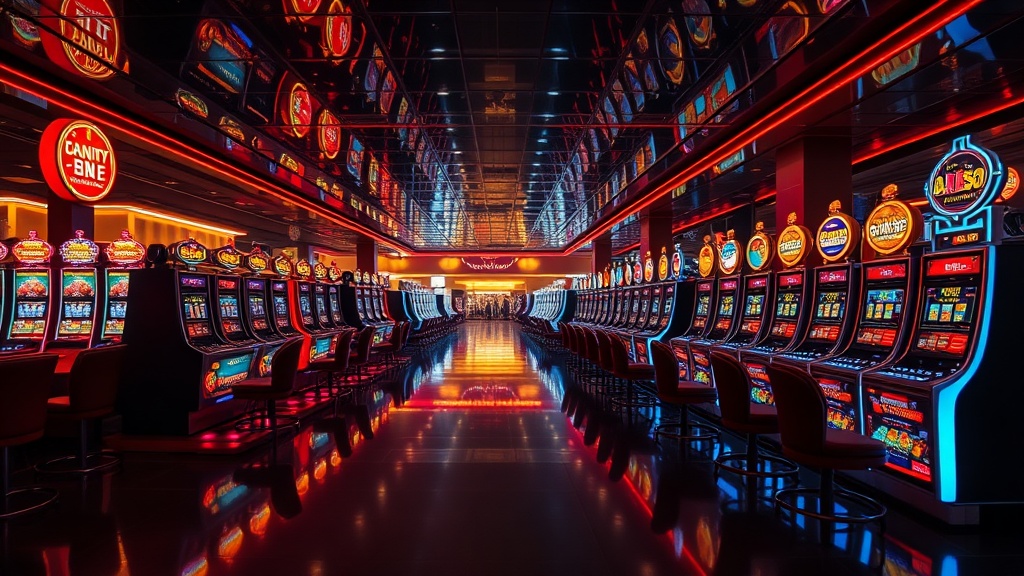
Casinos look like any other large commercial space from the outside. However, the gaming floor is one of the hardest wireless environments I have ever surveyed. Slot machines, metal, mirrors, and constant crowds all fight for the same airspace. Furthermore, the network can never go dark during business hours. In this post, I will walk through what makes casino Wi-Fi design so difficult and what Canadian IT teams should watch for.
The physical floor fights your signal
Slot machines are metal boxes packed tightly side by side. Consequently, they reflect and absorb signal in ways a survey from the parking lot will never predict. Mirrored ceilings and decorative surfaces add even more reflection. Moreover, the floor plan itself changes often. Operators move whole banks of machines for promotions and seasonal layouts. As a result, a design that worked in March can fail by June. For this reason, I treat every casino as a moving target rather than a fixed blueprint.
Density is the real problem
A busy gaming floor packs hundreds of people into a tight footprint. Each person carries two or three devices. Additionally, the machines themselves are network endpoints now. Modern slots stream audio, run player-tracking systems, and report to central monitoring in real time. Therefore, the client count on one floor can rival a small arena. In practice, co-channel interference becomes the enemy long before coverage does. Notably, I see far more failures from too many access points than too few. Overbuilding a dense floor with radios is the classic mistake, and it is easy to make.
Uptime is not optional
Retail Wi-Fi can drop for a few minutes without much cost. A casino cannot. Player-tracking, cashless gaming, and surveillance all ride the same wireless backbone. Consequently, a five minute outage can mean lost revenue and a compliance problem at the same time. Regulators in most provinces require gaming systems to log continuously. For that reason, I design casino networks with redundancy that a typical office would consider excessive. That said, the cost of downtime on a gaming floor justifies every dollar of it.
Segmentation cannot be an afterthought
Casinos run several logical networks on one physical infrastructure. Gaming systems, surveillance, point of sale, hotel guest access, and back office traffic all coexist. However, they must never touch each other. Proper VLAN segmentation and WPA3-Enterprise on the staff side are the baseline, not the finish line. Furthermore, guest traffic needs full isolation from anything that handles money or player data. I have walked into properties where a flat network put the surveillance feed one hop away from public Wi-Fi. Understandably, that is a finding no operator wants to hear.
What good casino Wi-Fi actually takes
Good design here rewards specialists who respect the floor and punishes anyone who copies an office template. Specifically, it starts with a real RF site survey done on the live floor, not a predictive model alone. Then it demands honest density planning and disciplined channel reuse. Finally, it locks down segmentation before a single guest ever connects. Ultimately, the three pillars are survey, density, and isolation. Skip any one of them and the floor will expose the gap fast.
At Baiden Group, we survey, design, troubleshoot, and manage wireless networks in exactly these kinds of demanding environments. Have questions about how these developments affect your network? Reach out to the Baiden Group team.