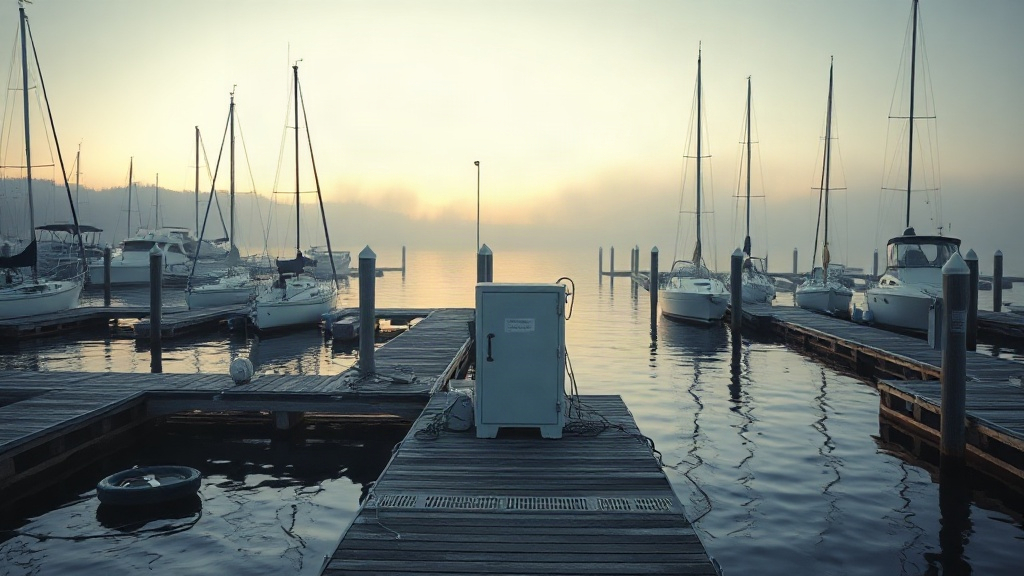
Marina Wi-Fi design looks simple on paper. Boaters want internet at the slip. Staff want reliable payments and working cameras. However, a marina is one of the harshest environments I have surveyed. Water, metal, and moving hulls break the assumptions that office designs rely on. For Canadian operators, a short season adds pressure to get it right the first time.
Water and Metal Change the RF Rules
Water absorbs Wi-Fi signal. For example, a hull full of fuel and a wet dock soak up energy quickly. Meanwhile, aluminum and steel hulls reflect signal in unpredictable directions. As a result, a strong signal at the dock office can vanish three slips away. I have seen this on every marina survey I have done.
Tides and lake levels add another variable. In practice, a floating dock rises and falls with the water. Therefore, a survey at one water level may not match another. I survey at more than one level whenever the marina allows it. Wind also matters, because swaying docks shift antenna aim by several degrees.
Boats Move, So Coverage Must Cope
A marina population never stays static. Boats arrive, leave, and swap slips every week. Consequently, the RF environment changes constantly. A design that works in June with half the slips empty can fail in July. At that point, the full fleet is back and every owner wants video calls.
Additionally, every boat is a potential source of interference. Many owners install their own routers, hotspots, and range extenders. Specifically, these devices often run at high power on 2.4 GHz. Thus the spectrum fills quickly. A spectrum walk of the docks usually reveals dozens of unmanaged networks. Therefore, I plan for 5 GHz and 6 GHz as the primary bands. The 2.4 GHz band serves only legacy devices.
Choose Outdoor Hardware and Power Carefully
Outdoor access points need proper ratings. Look for IP67 enclosures, marine grade mounts, and corrosion resistant fittings. Salt air destroys cheap hardware within a season. Freshwater marinas still face ice, wind, and lightning. Moreover, winter shutdown means equipment sits unattended for months. Plan for that from the start.
Power and cabling are often the real constraint. Long docks mean long cable runs, and copper Ethernet stops at 100 metres. For this reason, fibre backbones with PoE switches in weatherproof cabinets work best. In addition, ground and bond every cabinet. Lightning on open water is not theoretical.
Antenna choice matters as well. Directional antennas along the dock outperform omnidirectional units on tall poles. For instance, a sector antenna aimed down a finger pier gives consistent coverage. It also limits interference between neighbouring docks.
Separate Guests From Operations
Marinas run two very different networks. Boaters need bandwidth and easy access. Staff need secure, prioritized traffic for payments, fuel dispensers, and cameras. Therefore, segment them with VLANs and cap bandwidth on the guest network. Importantly, apply WPA3 wherever devices support it. Otherwise, a guest device can reach point of sale systems. That risk is real and easy to avoid.
Roaming deserves attention too. Boaters walk the docks with phones in hand. Consequently, access points must hand clients off cleanly. A proper post install validation survey confirms this before the season opens.
Overall, marina Wi-Fi design rewards careful survey work. Guessing at placement wastes money and frustrates guests. In short, measure the site, design for movement, and validate after install. Baiden Group delivers Wi-Fi design, RF site surveys, troubleshooting, and managed Wi-Fi for challenging environments across Canada. As a result, your team gets a network built for the real conditions on the water.
Have questions about how these developments affect your network? Reach out to the Baiden Group team.