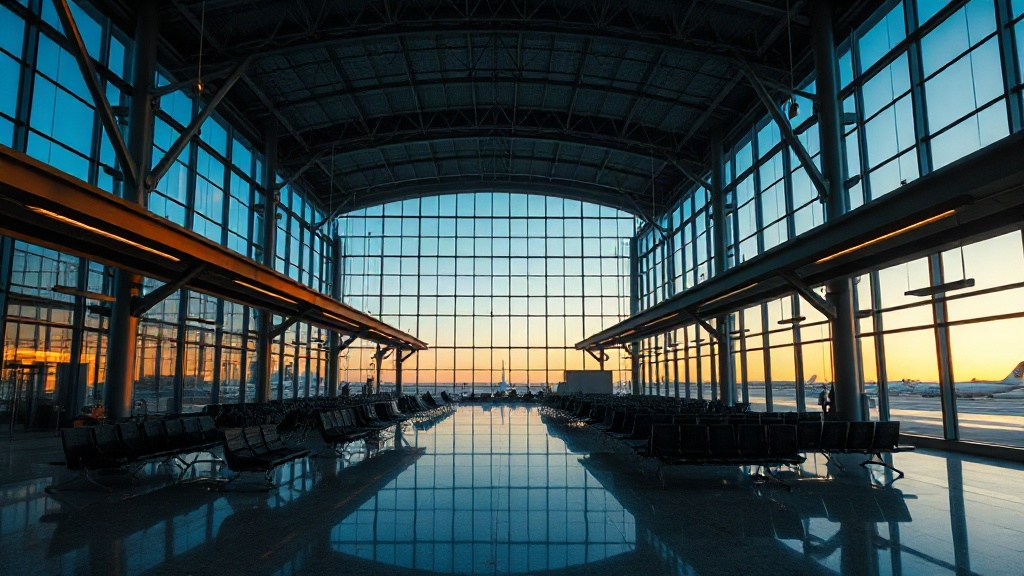
Airports are one of the hardest wireless environments I work in. The spaces are huge, the ceilings sit high above the floor, and the crowds swing from empty to packed in minutes. Enterprise IT teams often treat a terminal like a big office. However, that approach fails every time.
Over the years I have surveyed terminals, gate areas, baggage halls, and airside operations. Each zone behaves differently. Specifically, the design that covers a check-in hall will not serve a boarding gate at peak. For this reason, airport Wi-Fi design has to be planned zone by zone, not building wide.
Coverage is easy, capacity is the real fight
Most airport wireless complaints get blamed on coverage. In practice, coverage is rarely the problem. A modern access point throws plenty of signal across an open terminal. Instead, the failure is capacity. When a wide body aircraft unloads, hundreds of devices hit the same cell in the same minute.
Therefore the design has to plan for the busiest gate at the busiest hour, not the quiet afternoon. Additionally, I raise the minimum data rate so slow far clients cannot camp on a cell and starve everyone else. Band steering then pushes dual band devices to 5 GHz, which gives more channels and shorter cell range. As a result, airtime gets shared instead of hogged.
Metal, glass, and moving crowds
Airports are built from materials that punish RF. Curtain wall glass, structural steel, and concrete all attenuate or reflect signal. Moreover, much of that glass is Low-E coated, which carries a metallic layer that blocks Wi-Fi almost completely. A predictive design that assumes plain glass will promise coverage that never shows up on site.
Crowds add another variable. Notably, the human body is mostly water, and water absorbs 2.4 GHz and 5 GHz energy. A gate that tests clean when empty can degrade badly once it fills with two hundred passengers and their bags. For this reason, I validate every airport design with a real on site survey under realistic conditions, not a floor plan and a hope.
One building, many networks
A terminal is not a single network. Instead, it stacks several networks in the same airspace. Passenger Wi-Fi, airline systems, retail point of sale, baggage handling, and airport operations all share the RF environment. Meanwhile, each of them carries its own security and performance needs.
Consequently, channel planning and interference control matter more here than almost anywhere else. Co-channel interference between all those systems will drag the whole environment down. In addition, non Wi-Fi interferers show up constantly in airports, from radar to handheld radios to poorly shielded equipment. A spectrum analyzer sees what a simple Wi-Fi scan cannot, so I always sweep the band before I trust a channel plan.
What this means for Canadian operators
Canadian airports face the same physics plus real seasonal swings. For example, a regional terminal can sit quiet for hours, then absorb three arrivals at once. Ultimately, the network has to hold up at that peak, every time, because a dropped baggage scan or a stalled boarding gate costs real money and real delays.
In short, airport Wi-Fi design rewards planning and punishes shortcuts. Good design starts with a proper RF site survey, accounts for the building materials and the crowds, and separates the many networks that share the air. That is exactly the work Baiden Group does, from Wi-Fi design and RF site surveys to troubleshooting and managed Wi-Fi.
Have questions about how these developments affect your network? Reach out to the Baiden Group team.