Wi-Fi 8 is still a draft. However, vendors are already raising it in sales meetings. Therefore, IT teams need a way to read the standards calendar for themselves. Specifically, the 802.11bn ballot schedule is the best guide to your Wi-Fi 8 procurement timeline.
Where 802.11bn Stands Today
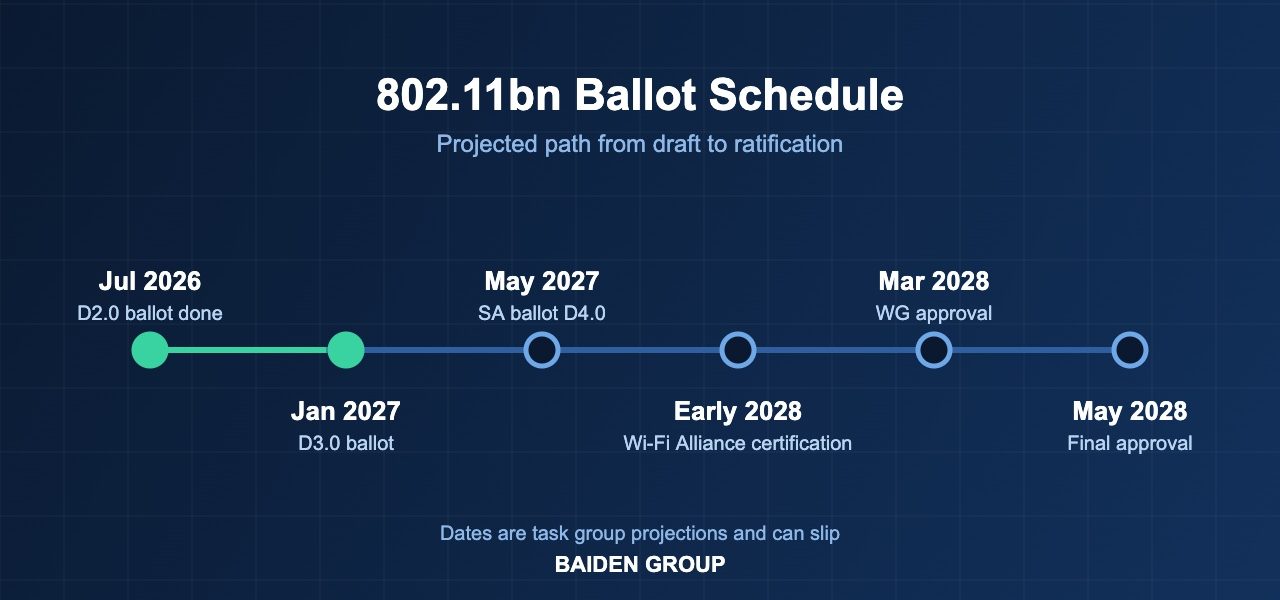
The IEEE working group completed its second letter ballot in July 2026. Draft 2.0 was the version under vote. In September, the group resolved roughly 1,850 comments and began producing Draft 2.1. Meanwhile, a third working group letter ballot is projected for January 2027.
The later milestones are further out. A Standards Association ballot on Draft 4.0 is projected for May 2027. Final working group approval is projected for March 2028. Then the review committee and standards board approvals are projected for May 2028. In short, ratification is about eighteen months away. These are projections from the task group, and dates can slip.
What Each Ballot Stage Tells You
A letter ballot is a formal vote inside the working group. Members submit comments, and the editors must resolve each one. Consequently, a draft that draws thousands of comments is still changing. Features can be added, removed, or reworked at that point.
The Standards Association ballot is different. A wider pool of reviewers votes at that stage. Generally, the changes become smaller and more technical. As a result, hardware built after that ballot carries less risk of a late silicon change.
Comment resolution is also a useful signal for buyers. Each resolved comment is a decision the group has made. Therefore, a falling comment count between drafts suggests the design is settling. In contrast, a rising count suggests the opposite. Ask your vendor how many comments remain open against the draft they follow.
Why Drafts Matter for Procurement
Vendors sometimes ship products based on an early draft. For example, Wi-Fi 7 access points appeared well before ratification. In fact, that is normal industry practice. The risk is that a product built on an early draft may not match the final standard.
Importantly, Wi-Fi Alliance certification for Wi-Fi 8 is expected to begin in early 2028, based on published estimates. Thus, a product marketed as Wi-Fi 8 ready in 2027 will not yet have passed interoperability testing. Moreover, the headline features depend on both sides of the link. Coordination between access points and seamless roaming between access point groups need support from the infrastructure and the client. A controller feature that clients cannot use delivers nothing.
Timing also affects budgets. For instance, a school board or hospital that buys access points in 2027 will likely run them for seven years or more. Therefore, the purchase should reflect what the standard looks like at the end of that period, not at the start. Additionally, a ratified standard gives you a stronger basis for warranty and support claims. In practice, that matters more than a feature list on a data sheet.
What Canadian IT Teams Should Do
Start by asking vendors which draft their silicon follows. Then request a written statement on hardware or firmware changes if the final standard differs. In addition, check client support before paying for any infrastructure feature. Finally, keep Wi-Fi 7 on the table. It is ratified, certified, and available now.
Overall, the ballot schedule is a planning tool. It tells you when the risk is high and when it starts to fall. At Baiden Group, we help Canadian organizations with Wi-Fi design, RF site surveys, troubleshooting, and managed Wi-Fi. For this reason, we can map your refresh cycle against the standards calendar. As a result, you buy at the right time and avoid paying for features you cannot use yet.
Have questions about how these developments affect your network? Reach out to the Baiden Group team.