Wi-Fi 8 is coming, and the marketing has already started. However, this release breaks from the pattern we are used to. For years, each new generation sold itself on a bigger speed number. In contrast, Wi-Fi 8 puts reliability first. As a field specialist who has been in enterprise wireless since 1999, that is the shift I have been waiting for.
What Wi-Fi 8 Actually Is
Wi-Fi 8 is the Wi-Fi Alliance name for the IEEE 802.11bn standard. Notably, the specialists who write it call it Ultra High Reliability, or UHR. The IEEE task group is still working through the draft. Specifically, Draft 2.0 slipped from May to July 2026. Nonetheless, the group still targets final ratification around May 2028. That timeline matters for anyone signing a purchase order. In practice, no enterprise gear ships against a finished standard until 2027 at the earliest. Certification from the Wi-Fi Alliance is not expected until late 2027 either.
Reliability Over Raw Speed
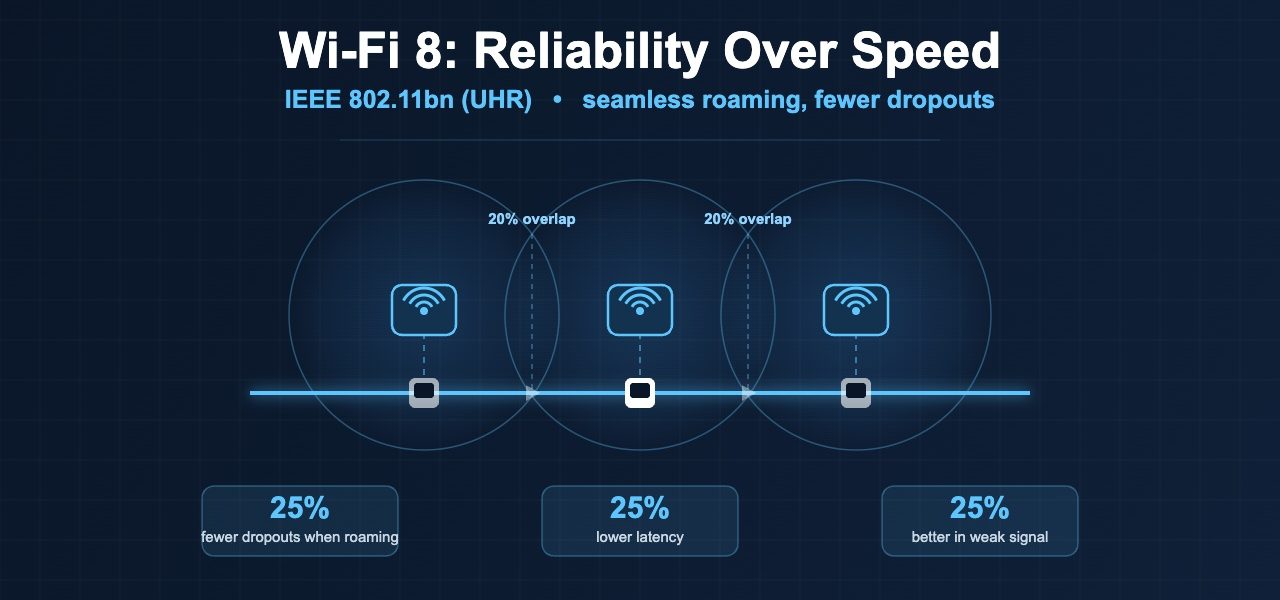
Here is the part the ads will skip. Wi-Fi 8 does not chase a headline throughput number. Instead, it targets three plain goals. First, about 25 percent better performance in poor signal conditions. Second, roughly 25 percent lower latency. Third, around 25 percent fewer dropouts when a device moves between access points. Notably, those Wi-Fi 8 reliability gains describe the real problems I see on site every week. Furthermore, none of them ever show up in a speed test run at the front desk.
Why This Matters on the Floor
Consider a hospital or a warehouse. A nurse pushing a cart or a forklift moving through racking does not need ten gigabits. Instead, that device needs to hold its connection while it moves. For example, a handheld scanner that drops for two seconds at every aisle costs real money across a full shift. Similarly, a vitals monitor that stutters during a roam is a patient safety issue, not a speed issue. Wi-Fi 8 aims straight at those failures. Specifically, it leans on tighter coordination between access points so the handoff from one AP to the next stops breaking sessions.
What This Means for Buying Decisions
The standard timeline should shape how you spend. Generally, the smart move is to match hardware to a ratified standard, not a draft. That said, some retail Wi-Fi 8 gear may appear as early as this summer. However, early silicon built against a moving draft is a gamble for a production network. In fact, I would not put draft hardware into a hospital or an airport. Meanwhile, Wi-Fi 6 and Wi-Fi 7 are mature, certified, and solving these problems well when the design is right.
What to Do Now
You do not need to rush. In fact, chasing draft chips is usually a mistake. That said, the planning starts today. Importantly, Wi-Fi 8 leans hard on dense, well placed access points and clean channel design. A reliability standard cannot rescue a bad RF layout. Therefore, if your current network drops calls or scanners during roaming, the cause is almost always your design, not your generation of hardware. Ultimately, a proper survey now makes any future upgrade far cheaper and far less painful.
Wi-Fi 8 is worth watching, but it is not a reason to wait on fixing what you already run. Overall, the fundamentals still win. Good design, a real RF site survey, and honest troubleshooting matter more than any logo on the box. At Baiden Group, that is the work we do every day, whether you run Wi-Fi 6, Wi-Fi 7, or something older. Have questions about how these developments affect your network? Reach out to the Baiden Group team.